
Thursday, June 30, 2011

Thursday, June 23, 2011
May I Share our Garden with You?
As much as I'd love to take credit for this beauty, I cannot. This is mostly the creation of my husband, who despite a busy schedule, and out of sheer stubborness, maintains this garden every year. Much of the plants are perennials and I mostly participate by watering and pulling weeds and dead heading. Oh, and collecting Japanese Beetles and drowning them in a diabolical frenzy. Enjoy!
![]()
![]()
![]()
 |
| The chainlink fence to the left will be replaced with a wooden privacy fence by our neighbors due to their aggressive dog. Archie, our airedale will be heartbroken as he adores Gina, the noisy mutt. |
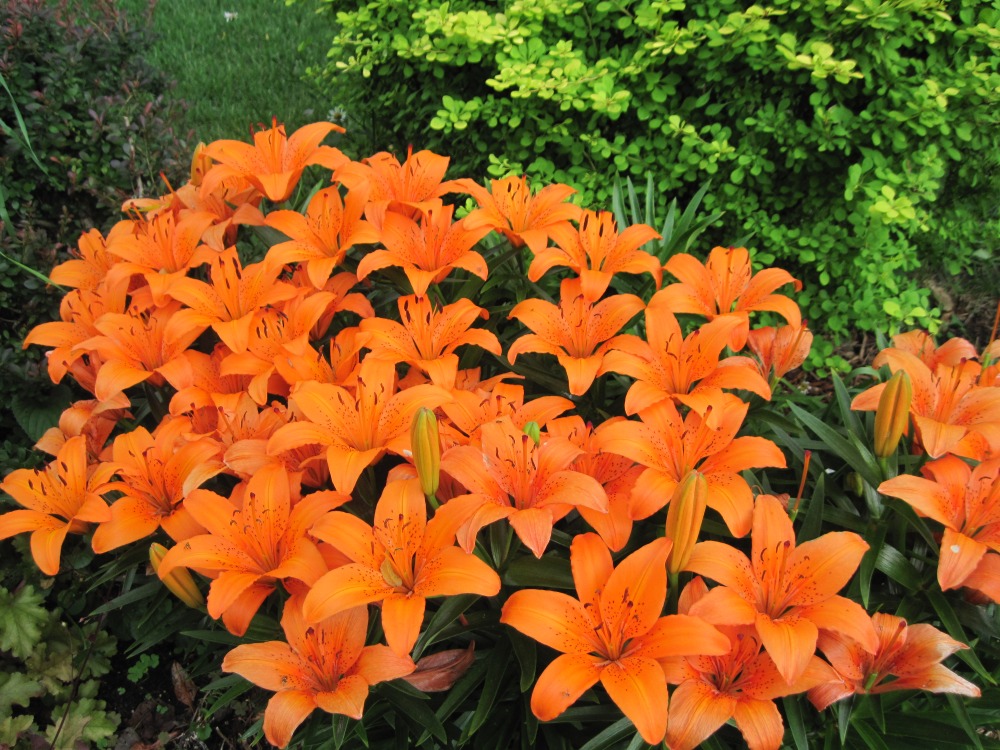 |
| Rabbits love this lilly. One year they ate it down to the stem, flowers, leaves and all. |


 |
| We have a huge, old deck. While a great feature of the backyard, it takes a lot of maintenance. My pressure washer is my best friend! No, wait, that would be my dishwasher. Or is it my washing machine. Actually, it's my coffee maker. |
 |
| Yup, my gardener husband has to have the dangerous variety of plants too. These cacti have formidable thorns. |
 |
| Between our front, back and side yard we have approximately 20 different varieties of hostas. |

 |
| This arrangement never fails to impress. The coleus is the filler and thriller. Potato vine is the spiller and will eventually reach all the way to the bottom. We over winter our many varieties of coleus in our family room. |
 |
| Some African daisy sort of thing flanked by stingless nettles. |
 |
| In the background are my tomatoes, jalapenos and green pepper plants. I wish there was space for more. |
Monday, June 20, 2011
Phonics Friends

In 'Phonics Friends' children are familiarized with the various sounds a particular letter makes. We read 'Umberto's Summer Day, The Sound of Short U' today. The book is laid out in a simple, easily understood, format. The first page is an introductory page which can be read by the parent or educator to the child. This page introduces the child to the letter and phonics feature or sound highlighted in that issue. Concluding the book is a page with word lists including the words the child read in the book. The sentences are easy to understand and a child will feel quite accomplished after reading one of these books. There are photographs on the left page and the right page features two to three sentences. Even an early reader can easily read and comprehend the short, illustrated stories within these books. Each sentence is reasonably short and contains at least one repetition of the phonics sound featured in the book.
My son (who will be six years old in August) loves these books and chooses them over and over again at our local library. He can read the books by himself with minimal assistance. I am a big believer in teaching children to read via phonics, adding high frequency word recognition only once phonics has been mastered. If I had to rate this series I would quite possibly give it a five out of five stars.
Monday, June 13, 2011
Boredom Busters?
If you are a parent you are guaranteed to have heard the whine: 'Mom, I'm booooored.'
What should we do? Many parents pack their children's days full with activities even during summer. Kids go to all sorts of camps and activities in the hope of staving off the summer doldrums. I on the other hand, will try to have a healthy balance between activities and carefully cultivated boredom.
'Huh?'
.................................
Here is what usually happens:
'Mom, I am bored.'
'Mmmmmm.'
'What shall I do?'
'How about playing with your cars, or coloring?'
'I don't feel like it.'
'Ok, how about....'
..............Well, you probably know how this goes on. I keep coming up with other ideas and they all are summarily rejected.
Then...
'Can I watch some TVeeeeeeee?'
'Nope.'
'Can I go on the computer?'
'Nope.'
'Can I play with the DS?'
'Nope.'
'But I am so booooored....'
'Too bad.'
The victim of my callousness slinks off to brood on the unfairness of it all. As he ascends the stairs to his room I may hear some stomping. Sort of his way of telling me that he isn't impressed with me at all.
I could say I sigh but I normally just grin.
And eventually my son, my youngest, does come up with something to entertain himself.
Unless, ....
.....he gets hold of his dad, in which case the conversation usually lasts only 2 minutes (at the utmost) and ends with the beeping sounds of the TV being turned on.
Pushover.
Wienie.
Marshmallow.
And here comes the 'when I grew up' yarn.
Yawn.
I had to haul water from an icy river after chopping wood for an hour and then I walked many miles to school. Upon coming home I had to milk the cows, swap the deck....
Seriously, even Tom Sawyer didn't have to do that. I just wanted to see if you were paying attention.
But in all honesty, I think I had a better childhood than my kids. We didn't have countless TV shows clamoring for our attention. There were no videogames. And personal PCs didn't exist either.
Uh-uh. I think I just dated myself.
 We played outside all day long. And read books. And then acted out the stories. We rode our bikes everywhere (without helmets) and swam in the local pond. Of course I grew up in a small village in Germany and these things were not only perfectly safe but also normal. Would I let my daughter ride her bike alone to her friend who lives a few blocks away? Heck no! Sad. Isn't it.
Let's bring this conversation back to the word.
Boredom. B-O-R-E-D-O-M. BOOOOORRRREDOM.
Boredom forces the mind to stop spinning. It forces a child's mind to relax for a little while and step back. Boredom comes in stages.
Stage one: The realization that the current activity has become less than satisfying.
Stage two: You keep doing the activity because you are hoping it'll become fun again.
Stage three: You give up the activity and maybe try something else with similar results.
Stage four: You realize that you are bored.
Stage five: You sit in your room and drool on yourself. After a while you attempt to fill that mental space with something else. If you are a teenager you may fall asleep. Or you pick up the phone to find someone to talk to. Eventually you'll start doing things which may or may not be stupid or dangerous and realize you are not bored anymore. If the bored child is not a teen he or she will go on the prowl to find something to fill that mental space.
Hello, it echoes in here, someone fill me up.
Don't.
Let them fill it up themselves. Just provide the raw materials.
When nothing comes to fill up the space the child will eventually come up with something creative to fill the space.
Boredom encourages thinking. It encourages creativity. But only if we allow the child to fill the space herself. To fill the space without our input of activities and especially without the use of electronic baby sitters. Give them options. At their disposal have Legos, crafts, art, books, discovery in the backyard, train the pet stupid tricks. Etc. It can't be spoon-fed entertainment as that defeats the purpose, the children have to use their brains to come up with something.
Allow your child to experience and deal with boredom. He or she will become a much safer teen. Teenagers who never learned to manage boredom will be far more likely to engage in risky behaviour just to stop feeling that way. Teach them from young on to be creative. Yes, it may be that your young child will come into the kitchen and say he wants to cook or bake or borrow pots and pans to make a percussion set up for 'music'. And when they do, don't you dare say 'No', if you can at all help it. Be creative with them and hand them a spoon.
What should we do? Many parents pack their children's days full with activities even during summer. Kids go to all sorts of camps and activities in the hope of staving off the summer doldrums. I on the other hand, will try to have a healthy balance between activities and carefully cultivated boredom.
'Huh?'
.................................
Here is what usually happens:
'Mom, I am bored.'
'Mmmmmm.'
'What shall I do?'
'How about playing with your cars, or coloring?'
'I don't feel like it.'
'Ok, how about....'
..............Well, you probably know how this goes on. I keep coming up with other ideas and they all are summarily rejected.
Then...
'Can I watch some TVeeeeeeee?'
'Nope.'
'Can I go on the computer?'
'Nope.'
'Can I play with the DS?'
'Nope.'
'But I am so booooored....'
'Too bad.'
The victim of my callousness slinks off to brood on the unfairness of it all. As he ascends the stairs to his room I may hear some stomping. Sort of his way of telling me that he isn't impressed with me at all.
I could say I sigh but I normally just grin.
And eventually my son, my youngest, does come up with something to entertain himself.
Unless, ....
.....he gets hold of his dad, in which case the conversation usually lasts only 2 minutes (at the utmost) and ends with the beeping sounds of the TV being turned on.
Pushover.
Wienie.
Marshmallow.
And here comes the 'when I grew up' yarn.
Yawn.
I had to haul water from an icy river after chopping wood for an hour and then I walked many miles to school. Upon coming home I had to milk the cows, swap the deck....
Seriously, even Tom Sawyer didn't have to do that. I just wanted to see if you were paying attention.
But in all honesty, I think I had a better childhood than my kids. We didn't have countless TV shows clamoring for our attention. There were no videogames. And personal PCs didn't exist either.
Uh-uh. I think I just dated myself.

Let's bring this conversation back to the word.
Boredom. B-O-R-E-D-O-M. BOOOOORRRREDOM.
Boredom forces the mind to stop spinning. It forces a child's mind to relax for a little while and step back. Boredom comes in stages.
Stage one: The realization that the current activity has become less than satisfying.
Stage two: You keep doing the activity because you are hoping it'll become fun again.
Stage three: You give up the activity and maybe try something else with similar results.
Stage four: You realize that you are bored.
Stage five: You sit in your room and drool on yourself. After a while you attempt to fill that mental space with something else. If you are a teenager you may fall asleep. Or you pick up the phone to find someone to talk to. Eventually you'll start doing things which may or may not be stupid or dangerous and realize you are not bored anymore. If the bored child is not a teen he or she will go on the prowl to find something to fill that mental space.
Hello, it echoes in here, someone fill me up.
Don't.
Let them fill it up themselves. Just provide the raw materials.
When nothing comes to fill up the space the child will eventually come up with something creative to fill the space.
Boredom encourages thinking. It encourages creativity. But only if we allow the child to fill the space herself. To fill the space without our input of activities and especially without the use of electronic baby sitters. Give them options. At their disposal have Legos, crafts, art, books, discovery in the backyard, train the pet stupid tricks. Etc. It can't be spoon-fed entertainment as that defeats the purpose, the children have to use their brains to come up with something.
Allow your child to experience and deal with boredom. He or she will become a much safer teen. Teenagers who never learned to manage boredom will be far more likely to engage in risky behaviour just to stop feeling that way. Teach them from young on to be creative. Yes, it may be that your young child will come into the kitchen and say he wants to cook or bake or borrow pots and pans to make a percussion set up for 'music'. And when they do, don't you dare say 'No', if you can at all help it. Be creative with them and hand them a spoon.
Tuesday, May 31, 2011
New Sounds in Our Home
It is 9:15 AM. I just got done eating a delicious breakfast. Oh, that tardy you say? Not so. I've been up since 5 AM thanks to the new sounds in my bedroom. Since then I got up, cleaned the kitchen, roused the kids and fed them breakfast and assigned tasks; I fed my husband and sent him out of the house. Breakfast for me was some Indian style scrambled eggs using left over veggies and enjoyed while reading this weeks CoH hosted by Why Homeschool. Good stuff. And all the while my ears are attuned to the new sounds. We have a new baby. Not one that requires bottles and diapers. It's a furry baby that needs frequent trips to the backyard for potty. Even at three in the morning. The new sounds in our home are the sound of a sleeping puppy, or a puppy crying for attention. And often they are the sounds of children playing with the puppy. And then there are the inevitable cries of 'No! Archie, no biting!' or 'No! Archie, no eating shoes!' And what would life be without the chorus: 'Archie peed on the carpet......'
We chose Archie on Saturday morning at the home of his breeder. We were the first there to choose from the boys (five of them) and Archie it was. Or Purple as he was known until then. The largest pup was a bit to sleepy for my comfort. Archie, the second largest was just the right kind of active. The craziest one was a pup with spotted ribbon. He was the runt of the litter and clearly the clown as well.
Meanwhile Archie has moved right into the house and our hearts. He is not quite 8 weeks old and a lovely fellow. He seems fairly mellow but has his crazy moments too, just like a healthy puppy should. Missy adores him to pieces and he loves her right back. Bear and Archie have their moments. Bear is still wary of puppy bites and doesn't understand why Archie doesn't obey his every command/demand. IT man tries to be manly but is clearly head over heals with this little scrap of fur and I... I need sleep. But he is cute.
We chose Archie on Saturday morning at the home of his breeder. We were the first there to choose from the boys (five of them) and Archie it was. Or Purple as he was known until then. The largest pup was a bit to sleepy for my comfort. Archie, the second largest was just the right kind of active. The craziest one was a pup with spotted ribbon. He was the runt of the litter and clearly the clown as well.
Meanwhile Archie has moved right into the house and our hearts. He is not quite 8 weeks old and a lovely fellow. He seems fairly mellow but has his crazy moments too, just like a healthy puppy should. Missy adores him to pieces and he loves her right back. Bear and Archie have their moments. Bear is still wary of puppy bites and doesn't understand why Archie doesn't obey his every command/demand. IT man tries to be manly but is clearly head over heals with this little scrap of fur and I... I need sleep. But he is cute.
 |
| Archie conquering a piece of wood. |
Thursday, May 26, 2011
Famous People - Queen Victoria 1819 - 1901
“ Her Majesty Victoria, by the Grace of God, of the United Kingdom of Great Britain and Ireland Queen, Defender of the Faith, Empress of India. ”
Alexandrina Victoria was born on the 24th of May, 1819, to Prince Edward, Duke of Kent and Strathearn and Princess Victoria of Saxe-Coburg-Saalfeld. Her childhood was strictly regulated and rather melancholy. After the death of the Duke of Kent, the Duchess of Kent found much solace and help in her comptroller Sir John Conroy. He was also rumored to be her lover. In an effort to raise Victoria into a woman totally dependent on them and without any opinions differing from theirs, she grew up in virtual isolation. Living under the yoke and restrictions of an elaborate set of rules and protocols devised by her mother and Conroy, the young girl was not even allowed to interact with other children. She could not move about the palace freely but was required to always have governess or her mother accompany her every step. Rather than break her spirit, this made the young girl even stronger and as soon as she was crowned queen she made her displeasure and anger known by banning Conroy from her household and banishing her mother to a far side of the palace.
Victoria was educated and raised by her governess Baroness Louise Lehzen of Hanover and tutored in a number of other subjects by various tutors. She grew up speaking German, English and eventually learned French as well.
Being the only legitimate child of Prince Edward, Duke of Kent (who died less than a year after her birth) young Victoria became heiress presumptive after the death of George IV in 1830. At that time there were no clear provisions made (legally speaking) for an underage monarch. And so it was decided by the Regency ACT of 1830, that her mother, the Duchess of Kent, would act as Regent should Victoria ascend the throne while still a minor. This of course was something greatly desired by the Duchess. However, King William , remained a burr in her side by stubbornly refusing to die. He disliked the Duchess to such an extent that he stated his desire to live until Victoria’s birthday to prevent a regency by the Duchess of Kent.
Upon King Williams’ death Victoria became the monarch on 20 June, 1837, the coronation itself took place a little more than a year later on 28 June 1838. Since the Queen was an unmarried woman she was still required to live with her mother even though the queen mother had been banished to the far corner of the palace.
Queen Victoria and Prince Albert
Victoria first met Prince Albert of Saxe-Coburg and Gotha (her cousin) when she was only seventeen. In her diary she wrote: "[Albert] is extremely handsome; his hair is about the same colour as mine; his eyes are large and blue, and he has a beautiful nose and a very sweet mouth with fine teeth; but the charm of his countenance is his expression, which is most delightful." They continued to keep contact via letters and very infrequent visits by Prince Albert.
The Queen and Prince Albert were married on 10 February 1840. They had 9 children and 42 grandchildren. It was Prince Albert and Lord Melbourne that taught Victoria much about being a 'constitutional monarch'. In simpler words, a 'constitutional monarchy' gives little power but offers much influence. A number of attempts on her life was made during her reign, but her strength in dealing with these situations only helped her popularity. It was typhoid fever that took Prince Albert from the side of his beloved Victoria on December 14, 1861. His death devastated the queen. Her mother had passed away in March of the same year, and despite their poor relationship over much of Victoria’s life, the loss was hard on her. Victoria entered a state of mourning and wore black for the remainder of her life. She also began to live in seclusion and avoided public appearances which earned her the nickname ‘Widow of Windsor’. The political climate along with her seclusion reduced her popularity but she continued to reside mainly in Balmoral, Osborne house and Windsor Castle.
As time went by, Victoria became increasingly reliant on her Scottish manservant, John Brown. Although rumors of a romantic connection were refuted, when she was laid to rest in her coffin, she had a memento of John Brown with her, along with one of her beloved Albert. Rumors surfaced in 2008 that Victoria's body wore the wedding ring of John Brown's mother, placed on her hand after her death, however this has not been verified by credible sources.
Queen Victoria died January 22, 1901 of a cerebral hemorrhage at Osborne House on the Isle of Wight, where she had spent every Christmas after being widowed. She was buried beside Prince Albert in the Frogmore Mausoleum at Windsor Great Park. Queen Victoria had reigned for a total of 63 years, seven months and two days and died at the age of 81.
Sources:
http://www.victorianstation.com/queen.html
http://www.royal.gov.uk/HistoryoftheMonarchy/KingsandQueensoftheUnitedKingdom/TheHanoverians/Victoria.aspx
http://www.victorianweb.org/vn/victor6.html
Wikipedia.com
 |
| I chose 'Queen Victoria' by Franz Xaver Winterhalter because it shows her as a young woman rather than the melancholy dowager she became in her later years and the portraits of which are well known. |
Alexandrina Victoria was born on the 24th of May, 1819, to Prince Edward, Duke of Kent and Strathearn and Princess Victoria of Saxe-Coburg-Saalfeld. Her childhood was strictly regulated and rather melancholy. After the death of the Duke of Kent, the Duchess of Kent found much solace and help in her comptroller Sir John Conroy. He was also rumored to be her lover. In an effort to raise Victoria into a woman totally dependent on them and without any opinions differing from theirs, she grew up in virtual isolation. Living under the yoke and restrictions of an elaborate set of rules and protocols devised by her mother and Conroy, the young girl was not even allowed to interact with other children. She could not move about the palace freely but was required to always have governess or her mother accompany her every step. Rather than break her spirit, this made the young girl even stronger and as soon as she was crowned queen she made her displeasure and anger known by banning Conroy from her household and banishing her mother to a far side of the palace.
Victoria was educated and raised by her governess Baroness Louise Lehzen of Hanover and tutored in a number of other subjects by various tutors. She grew up speaking German, English and eventually learned French as well.
Being the only legitimate child of Prince Edward, Duke of Kent (who died less than a year after her birth) young Victoria became heiress presumptive after the death of George IV in 1830. At that time there were no clear provisions made (legally speaking) for an underage monarch. And so it was decided by the Regency ACT of 1830, that her mother, the Duchess of Kent, would act as Regent should Victoria ascend the throne while still a minor. This of course was something greatly desired by the Duchess. However, King William , remained a burr in her side by stubbornly refusing to die. He disliked the Duchess to such an extent that he stated his desire to live until Victoria’s birthday to prevent a regency by the Duchess of Kent.
Upon King Williams’ death Victoria became the monarch on 20 June, 1837, the coronation itself took place a little more than a year later on 28 June 1838. Since the Queen was an unmarried woman she was still required to live with her mother even though the queen mother had been banished to the far corner of the palace.
Queen Victoria and Prince Albert
Victoria first met Prince Albert of Saxe-Coburg and Gotha (her cousin) when she was only seventeen. In her diary she wrote: "[Albert] is extremely handsome; his hair is about the same colour as mine; his eyes are large and blue, and he has a beautiful nose and a very sweet mouth with fine teeth; but the charm of his countenance is his expression, which is most delightful." They continued to keep contact via letters and very infrequent visits by Prince Albert.
The Queen and Prince Albert were married on 10 February 1840. They had 9 children and 42 grandchildren. It was Prince Albert and Lord Melbourne that taught Victoria much about being a 'constitutional monarch'. In simpler words, a 'constitutional monarchy' gives little power but offers much influence. A number of attempts on her life was made during her reign, but her strength in dealing with these situations only helped her popularity. It was typhoid fever that took Prince Albert from the side of his beloved Victoria on December 14, 1861. His death devastated the queen. Her mother had passed away in March of the same year, and despite their poor relationship over much of Victoria’s life, the loss was hard on her. Victoria entered a state of mourning and wore black for the remainder of her life. She also began to live in seclusion and avoided public appearances which earned her the nickname ‘Widow of Windsor’. The political climate along with her seclusion reduced her popularity but she continued to reside mainly in Balmoral, Osborne house and Windsor Castle.
As time went by, Victoria became increasingly reliant on her Scottish manservant, John Brown. Although rumors of a romantic connection were refuted, when she was laid to rest in her coffin, she had a memento of John Brown with her, along with one of her beloved Albert. Rumors surfaced in 2008 that Victoria's body wore the wedding ring of John Brown's mother, placed on her hand after her death, however this has not been verified by credible sources.
Queen Victoria died January 22, 1901 of a cerebral hemorrhage at Osborne House on the Isle of Wight, where she had spent every Christmas after being widowed. She was buried beside Prince Albert in the Frogmore Mausoleum at Windsor Great Park. Queen Victoria had reigned for a total of 63 years, seven months and two days and died at the age of 81.
Sources:
http://www.victorianstation.com/queen.html
http://www.royal.gov.uk/HistoryoftheMonarchy/KingsandQueensoftheUnitedKingdom/TheHanoverians/Victoria.aspx
http://www.victorianweb.org/vn/victor6.html
Wikipedia.com
Wednesday, May 25, 2011
Weekly Geography Fun Quiz # 1 Answers
So, how many did you know? I hope you had fun discovering the answers with your globe and atlas.
1. The Orinoco is a river in which northern South American country? Venezuela
2. Asuncion is the captial of which central South American country? Paraguay
3. Is Guatemala a South American country? No it is not. It is a Central American country.
4. Where would you look for the Rio Grande? Border between the State of Texas and Mexico
5. Which are the greater Antilles? Group of Islands including Cuba, Jamaica, Hispaniola (Haiti/Dominican Republic.)
6. Kuala Lumpur is the capital city of which southeast Asian Country? Malaysia
7. Where would you be if you sailed along the Strait of Malacca? Between Malaysia and the Indonesian island of Sumatra

1. The Orinoco is a river in which northern South American country? Venezuela
2. Asuncion is the captial of which central South American country? Paraguay
3. Is Guatemala a South American country? No it is not. It is a Central American country.
4. Where would you look for the Rio Grande? Border between the State of Texas and Mexico
5. Which are the greater Antilles? Group of Islands including Cuba, Jamaica, Hispaniola (Haiti/Dominican Republic.)
6. Kuala Lumpur is the capital city of which southeast Asian Country? Malaysia
7. Where would you be if you sailed along the Strait of Malacca? Between Malaysia and the Indonesian island of Sumatra
Subscribe to:
Posts (Atom)